STITCH Runway: In Conversation with Sundays Vintage
In the lead-up to the STITCH Runway at Melbourne Fashion Festival, I sat down with some of the designers to unpick the fashion industry from the ground up.
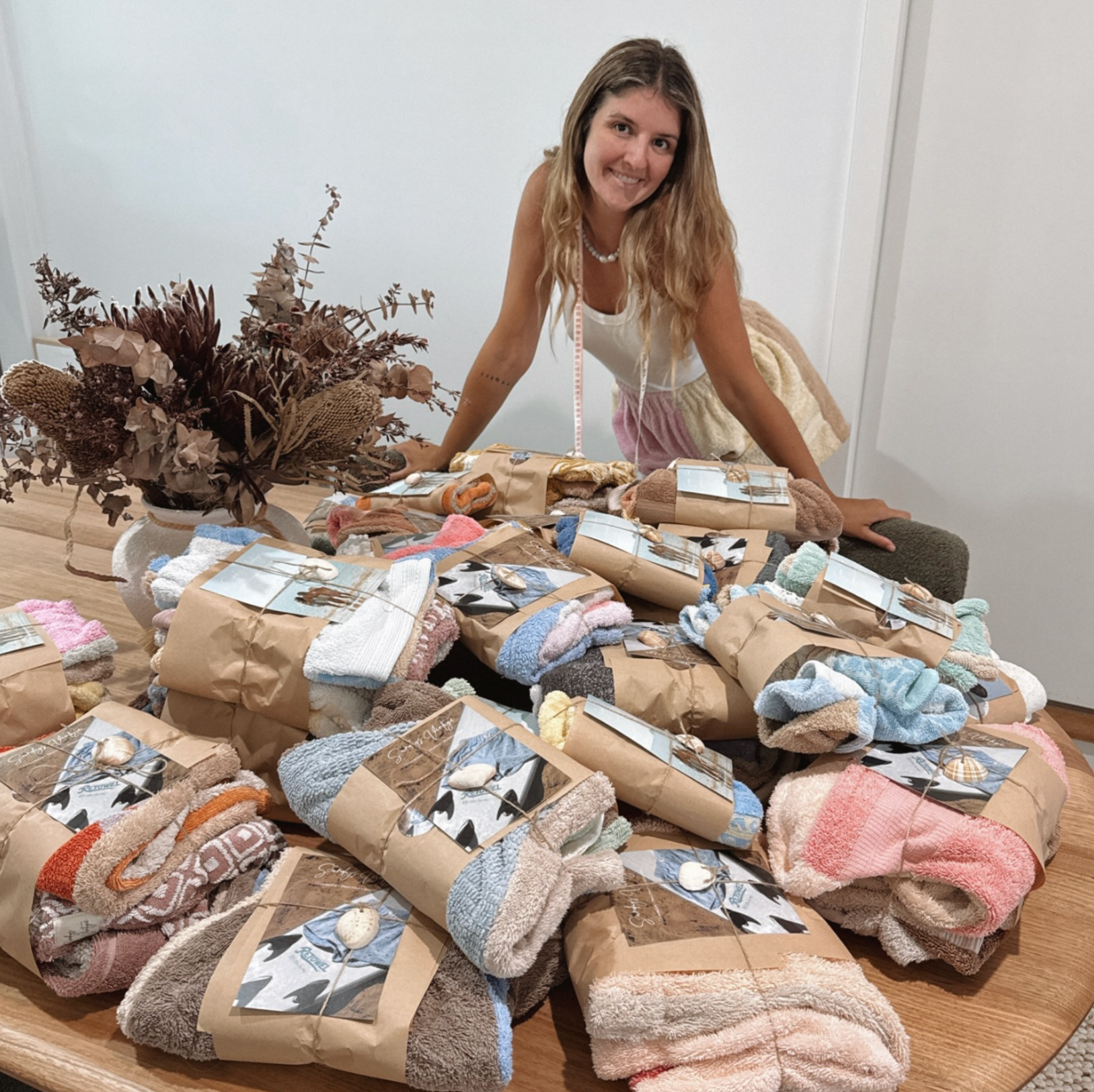
Meeting Elisa was a breath of fresh air. A fellow founder, she spent years working full-time in the fashion industry while using every spare hour for late-night sewing sessions, fulfilling orders on the side. She’s since jumped ship and now works full-time in her own business, Sundays Vintage. The risk, along with a bold rebrand and pivot into retowel for her clothing, has clearly paid off.
I was lucky enough to catch Elisa mid-week, between making and hosting, as her weekends are now filled with markets stretching from Sydney to Melbourne.

J: Elisa, I’d love to know, what was the moment that made you realise this brand needed to exist?
E:
It started back in 2020 as a curation of vintage and pre-loved clothing that I sold online. After my nonna passed away, my partner and I renovated and moved into her house. When I opened her wardrobe, I found these incredible 90s pieces she’d held onto, garments you just don’t typically find today. They were so well made, using quality textiles.
I kept a lot of it because I couldn’t bring myself to throw it away. Reselling vintage was a side passion at the time. I’d studied fashion design and graduated in 2013, but when I got back on the sewing machine, I started noticing all these amazing materials I could work with; blankets, curtains, tablecloths.
I loved creating one-of-a-kind pieces that no one else would have. Back then it was a mishmash of textiles. Getting into towelling, or Retowel, as I’ve called it, was something I really stumbled into. I didn’t realise it was going to become the thing.
I made myself a pair of towelling shorts and people kept commenting on them. So I made a few more, added them to my market stall and posted them on Instagram- and they just kept selling out.

Towelling, for me, is nostalgic coastal clothing made for easy beachwear. I’m a beach girl, my partner’s from the Central Coast, and we’re now looking to move from Melbourne to Newcastle. Coastal areas are really where my products shine.
J: What problem, if any, in fashion were you personally frustrated by when you started?
E:
Fast fashion and overproduction really upset me. Now that I’m sewing so much more, I can see just how much time goes into a single piece. It’s definitely becoming more obvious too- when you go into thrift stores now, you see so much plastic and such low-quality clothing.
People can’t hold onto Shein for long. I remember my grandma’s wardrobe, the quality of fabrics back then was completely different. Vintage tablecloths, wool blankets… even now, sometimes I’ll be drawn to a colour or texture on a rack and pull it out, only to realise it’s a fast-fashion label.
Touching fabrics, being drawn to texture and colour, it really highlights how much we’ve lost in terms of quality.
J: What does ‘circular’ mean to you right now, in your business or in your life?
E:
In my business, circularity is how everything is made- keeping materials in rotation and choosing good fabrics with longevity. When I design something, I want to see the end product passed down.
There’s an energy in that. I try to use as much of the towelling as possible and my patchwork bags are a good example. I really struggle to let go of scraps. The same goes for lace off-cuts, they’ll become scrunchies, or I’ve even used them as stuffing. I once made a doorstopper for my sewing studio because I was sewing in the garage and all the cold air kept coming through.
I’m always trying to think of another use before putting anything in the bin. Recently, I donated two bags of textiles to Upparel when they had a collection through my mum’s local council. That felt good.

J: What’s the biggest challenge you’re currently navigating as a sustainable designer?
Scaling, and growing, without compromising what Sundays Vintage is. I’m slow fashion and I want to stay that way, but I’m sewing everything myself. My mum helps me cut sometimes, she can’t sew, but this is where I get stuck.
I love creating one-of-a-kind pieces, but once they find their owner, they’re gone. I actually like where I’m at right now: slowly, steadily putting myself out there. But the question is, how do I grow sustainably without losing what makes Sundays Vintage special?
This year, I’m throwing myself into things I wouldn’t normally do- like this fashion show. I’ve had thoughts like my pieces aren’t runway enough, but I know there will be people there who love what I make.
I’m not about wild, conceptual designs- I’m everyday wear. There’s a lot of imposter syndrome around sewing to a certain perceived level. Runway can sometimes feel like, Where would I even wear that? I can appreciate the creativity, but are runways inherently unsustainable when pieces are so occasional?
J: Finally, what’s inspiring you right now or giving you the energy to keep going?
Honestly, the community, the customers and followers who constantly comment and message me. I’m usually by myself in my studio thinking, Is anyone going to like this? Is anyone going to buy anything?
When I launched the retowel pieces and people loved them- bought them, sent photos of themselves and their kids wearing them, it meant everything. Hearing that people appreciate the love and thought behind each piece is what keeps me going.
I do wish I’d done this sooner, but everything happens at the right time. I knew I had to either go all in or let it go. And if it doesn’t work out, I can always get another job. You just have to dive in.

Comments